
The VW Kübelwagen: Why a 50-year-old documentary is far superior to today's practical standards
In today’s world, where technological innovation and efficiency are the focus, the importance of well-prepared technical documentation is often overlooked. However, a look back at the technical regulations and documentation from 50 years ago, particularly in the example of the VW Kübelwagen, shows how essential these documents are for the operation and maintenance of machines and vehicles.
Detailed documentation as a mark of quality
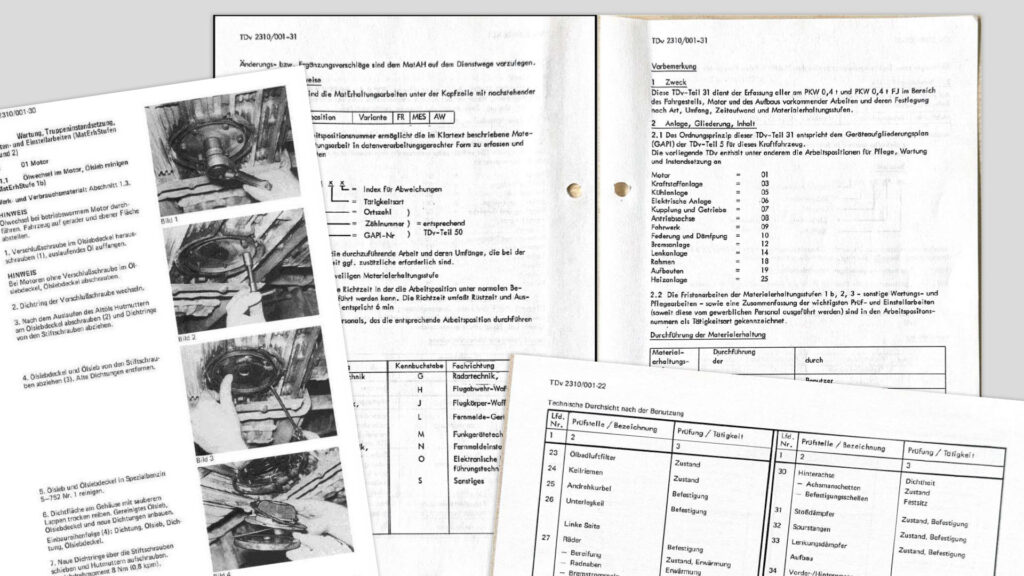
An outstanding example of excellent technical documentation is the German Armed Forces’ regulations for technical equipment. These regulations were drawn up with great expertise and at considerable financial expense. They included detailed maintenance and inspection plans as well as repair and replacement plans. Supplemented by pictures and precise instructions, this was the highest level of documentation that could be achieved. The documentation specified exactly which tools were to be used, how screws were to be tightened and loosened, and which parts were to be replaced under which conditions. The necessary qualifications of the personnel were also clearly defined.
The VW Kübelwagen – a symbol of robustness and versatility
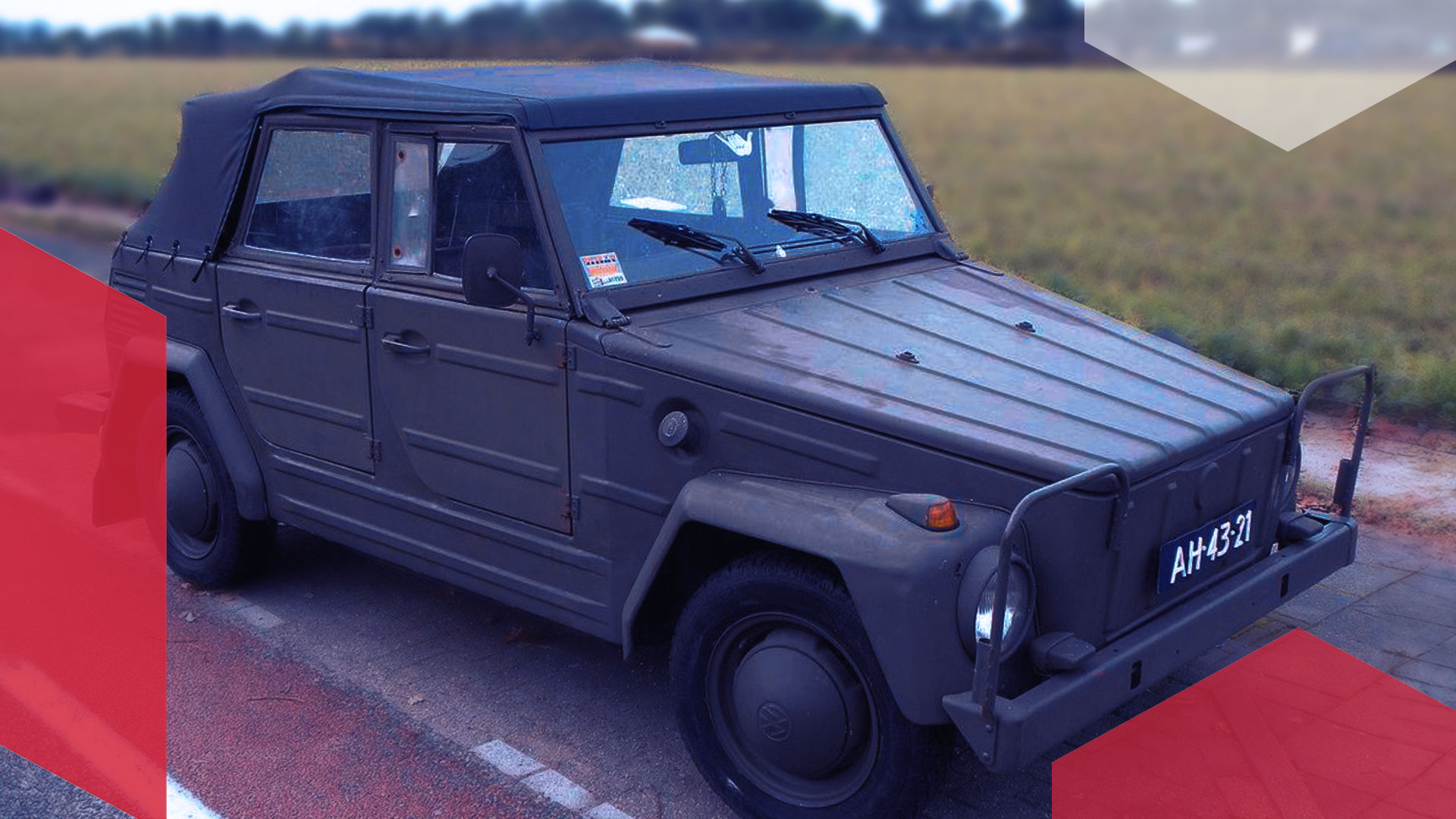
The VW Kübelwagen, developed for use in difficult terrain, is an example of robust construction and versatility. With its box-shaped body and four half-doors, it was suitable for a wide range of uses, from military to rescue services. This vehicle embodies a spirit of adventure, freedom, and nostalgia, and continues to inspire car enthusiasts even after many years.
Special features of the documentation of the VW Kübelwagen
The documentation for the VW Kübelwagen was exceptionally precise and comprehensive, making it an outstanding example. Here are some of its special features:
Detailed step-by-step instructions: Each maintenance and repair task was described in detailed steps, including the direction in which screws had to be turned and the specific tools that should be used.
Visual support: The documentation was full of pictures and diagrams that visually supported the procedures described, making them easier to understand and do right.
Comprehensive maintenance schedules: There were precise schedules for regular maintenance and inspections, which made sure the vehicle was always in optimal condition.
Qualification requirements: The documentation specified the necessary qualifications and training of personnel to ensure that only qualified professionals performed maintenance and repair work.
Replacement and maintenance plans: These plans provided clear instructions on which parts were to be replaced under which conditions to ensure the longevity and reliability of the vehicle.
Differences from current documentation standards
Today’s documentation standards have evolved, but they often lack the precision and thoroughness found in the documentation for the VW Kübelwagen:
Complexity and scope: Modern documentation tends to be more extensive and difficult to understand due to the increasing complexity of devices. It is often divided into several specialized documents, which can make it difficult to follow.
Digital formats: While digital documentation offers the advantage of easier distribution and updating, it can be less accessible, especially in situations where access to electronic devices is not possible.
Less visual support: Modern documentation often contains fewer detailed images and diagrams, as it is assumed that readers already have a higher level of technical knowledge.
Insufficient training instructions: There is often less focus on the specific qualifications and training of personnel, as it is expected that skilled workers will have general technical knowledge.
Focus on compliance: Modern documentation often places more emphasis on legal and regulatory requirements than on practical, detailed instructions for maintenance and repair.
Why the documentation of the bucket truck was superior
The documentation for the VW Kübelwagen was so much better than today’s standard because it was extremely detailed and practical. It was designed so that even people with limited technical knowledge would be able to maintain and repair the vehicle. This was particularly important in a military context, where quick and efficient repairs were necessary under difficult conditions.
The combination of detailed step-by-step instructions, comprehensive visual aids, and clearly defined qualification requirements ensured that the VW Kübelwagen was always ready for action. This thorough approach to documentation is something that today’s plant operators can learn a lot from in order to improve efficiency, reliability, and safety.
It is to be hoped that the industry will once again focus more on the importance of such documentation and that the Champions League of technical documentation will not be forgotten.
We support you!
We can support you in this area in a variety of ways and bring your documentation up to the level of the Kübelwagen. Please feel free to contact me directly:
Your contact person: