
Loss of knowledge due to generational change: How to master knowledge transfer in technical facilities
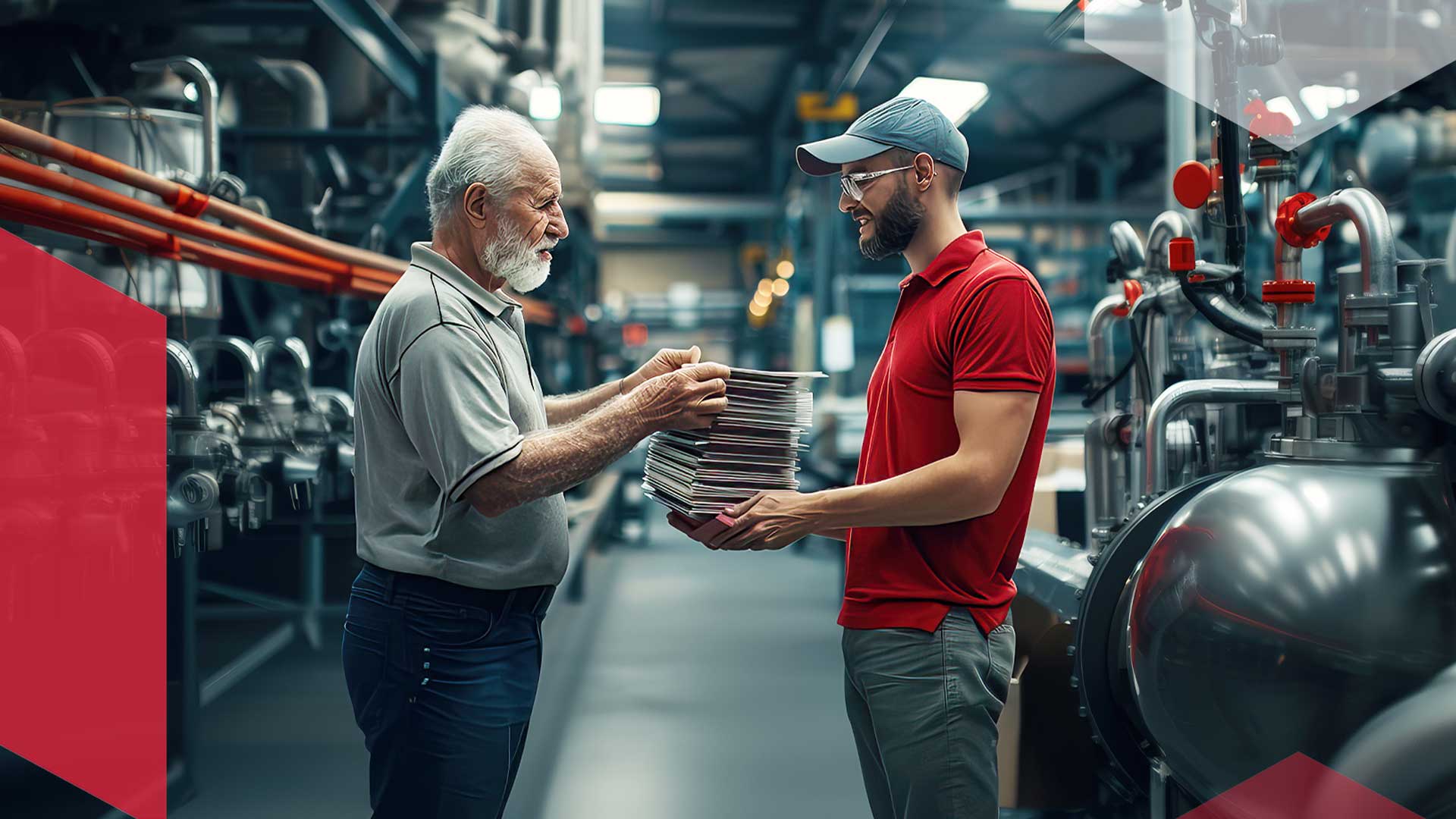
The technical documentation for thermal waste treatment plants differs in several key aspects from the documentation for other industrial plants.
Many companies around the world are facing a major change: generational change. As older employees enter their well-deserved retirement, younger employees are entering the workforce. This change brings with it a challenge that is often overlooked: the potential loss of valuable knowledge and experience. This can become a major problem, especially when it comes to plant documentation and maintenance.
So how can you ensure that the valuable know-how of your long-standing employees is not lost when they leave the company?
Today, we will give you some valuable tips.
The importance of knowledge transfer in technical documentation
Technical documentation is the backbone of every industrial plant. It includes operating instructions, maintenance schedules, safety protocols, and technical drawings. These documents are essential not only for daily operations but also for the long-term maintenance and further development of the plants. When experienced employees retire, their in-depth knowledge of this documentation and the specific intricacies of the plants is often lost. This is especially true when the documentation is incomplete or out of date.
Long-term employees know the plant inside and out. They know which strategies have worked in the past, what maintenance work has been carried out, and when modifications have been made. All this information is crucial for the smooth functioning of the plant and must now find its way into the minds of the next generation.
We face three particularly significant challenges in this regard:
- Loss of experiential knowledge:
Long-standing employees often possess valuable experiential knowledge that is not always recorded in official documentation. This can include details on specific work processes, troubleshooting, or optimization opportunities. - Lack of standardization:
Many companies lack a uniform structure for technical documentation. Different departments or even individual employees may have developed their own methods, which affects the consistency and comprehensibility of the documents. - Technological changes:
Rapid technological progress means that documentation must be constantly updated. This poses an additional challenge when attempting to transfer knowledge from experienced employees at the same time.
Strategies for managing the loss of knowledge
To effectively counteract the loss of knowledge due to generational change, it is necessary to develop systematic and sustainable strategies. These strategies should aim to preserve the experiential knowledge of long-standing employees and transfer it seamlessly to subsequent generations. Ideally, this should not be done just two weeks before the experienced employee leaves the company, but early on—preferably immediately.
Both organizational measures and technological solutions play a crucial role here. Here are some proven approaches you can implement to optimize knowledge transfer and minimize the loss of valuable knowledge:
- Digitization of documentation:
Invest in digital tools and platforms to digitize technical documentation. This not only facilitates access to information, but also enables more efficient management and updating of documents. Digitization can also help convert knowledge into interactive formats such as videos, simulations, and virtual training environments, which facilitates the learning process for new employees. - Process documentation:
In addition to technical details, the documentation process itself should also be documented. This includes instructions for creating, maintaining, and updating technical documents. - Documentation standards:
Developing and implementing company-wide standards for technical documentation is also a great help. These standards should include clearly defined structures, terminology, and processes. - Mentoring programs:
Establishing mentoring programs in which experienced employees pass on their knowledge to younger colleagues also works very well. This can be done through regular meetings, joint projects, or targeted training courses. - Knowledge databases:
Build digital knowledge databases in which all relevant information is systematically recorded and made easily accessible. These databases should be regularly updated and maintained. - Training and continuing education:
Through ongoing training and continuing education programs for all employees, you can ensure that they are familiar with the latest technologies and documentation methods.
Practical implementation
Successful knowledge management therefore requires not only a clear strategy, but also consistent implementation. It is crucial that companies not only develop theoretical concepts, but also put them into practice. This means taking concrete measures that support knowledge transfer in daily operations and ensure that valuable knowledge is retained. Here are some concrete steps that companies can take:
- Initial inventory:
Create a comprehensive inventory of all existing documentation and identify gaps or outdated information. We are happy to assist you with this. - Workshops and training:
Organize regular workshops and training sessions to raise awareness of the importance of technical documentation and communicate best practices. We are also available to provide advice and support in this area. - Feedback loops:
Implement feedback loops to ensure continuous improvement of documentation processes. Employees should be encouraged to contribute suggestions for improvement. - Technological support:
Take advantage of modern software solutions, such as our DMS software “ADAM,” which facilitates the creation, management, and distribution of technical documentation. These tools can also help automate and optimize knowledge transfer. If you have already implemented software, we are also happy to help you get the most out of your tool.
Challenges beyond technical issues
The generational change poses more than just technical challenges for companies. The world of work has changed dramatically in recent decades. Technological advances, globalization, and new working models have led to a transformation that is forcing companies to be more dynamic and agile. Traditional ways of working are giving way to new, more flexible models that enable a faster response to change. Remote working, virtual teams, and digital communication tools are now ubiquitous and are fundamentally changing the way companies operate.
This change also brings new challenges, particularly in terms of managing knowledge transfer between different generations of employees. In many companies, employees from different age groups work together, from the baby boomer generation to millennials and the younger Generation Z. Each generation brings its own perspectives, skills, and ways of working. While older employees often have decades of experience and deep expertise, younger employees bring innovative ideas, technical know-how, and an understanding of modern technologies.
Dealing with this generational mix requires a rethink of corporate culture and working practices. Traditional hierarchies and rigid structures must be broken down in favor of flatter organizations and more flexible working models. Communication and cooperation between generations must be encouraged in order to exchange knowledge and experience. It is important to create an open working environment in which employees of all ages feel respected and listened to.
In addition, technological solutions play an important role in knowledge transfer between generations. Knowledge management systems, interactive learning platforms, and digital collaboration tools can help capture, store, and share information and best practices. Training and development programs should be tailored to the needs of both experienced employees and younger generations to ensure that all employees have the skills and knowledge necessary to succeed.
Overall, managing generational change requires a conscious effort to recognize and leverage the knowledge and skills of all employees. Companies that succeed in creating an inclusive culture and promoting knowledge transfer between generations will be well equipped to successfully meet the challenges of the ever-changing world of work.
Conclusion with a look to the future
Generational change is an inevitable reality for plant operators worldwide. As older employees retire and young talent joins the workforce, a dynamic shift is taking place that presents both opportunities and challenges. It is up to companies to ensure that this transition runs smoothly and that the valuable knowledge of their employees is retained.
Targeted strategies for knowledge transfer are crucial to ensure that the expertise of experienced employees is not lost. In addition, technologies are playing an increasingly important role in knowledge transfer. Companies are increasingly relying on digital platforms and knowledge management systems to collect, organize, and make information easily accessible. These systems enable employees to access important resources, share best practices, and learn continuously.
Loss of knowledge due to generational change is undoubtedly a challenge that every company must face. But with the right planning, strategy, and technology, companies can overcome this challenge and emerge stronger from the change.
We support you!
We can support you in this area in a variety of ways. Please feel free to contact me directly:
Your contact person: